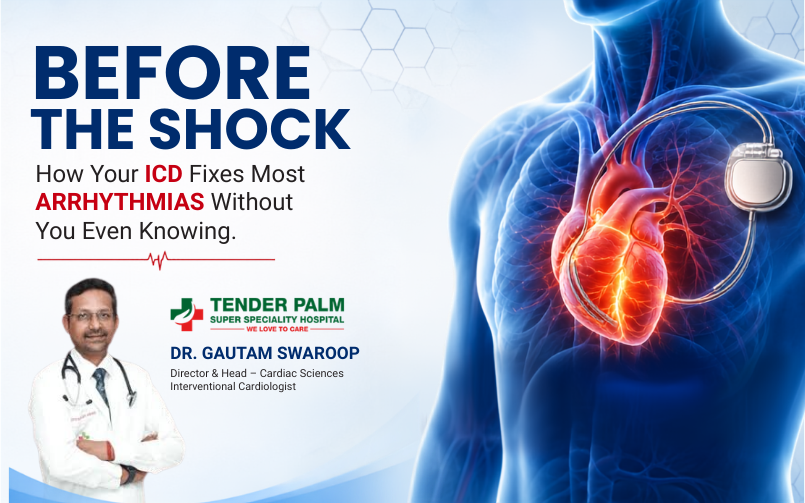
Before the Shock: How Your ICD Fixes Most Arrhythmias Without You Even Knowing
Quick Summary
Yes, absolutely. An Implantable Cardioverter Defibrillator does not always deliver a painful shock. Specifically, modern devices use a gentle treatment called Anti-Tachycardia Pacing first.
Consequently, this treatment sends tiny electrical impulses into your heart muscle. Therefore, it silently breaks the dangerous rhythm. Ultimately, this allows your normal heartbeat to return instantly. The process happens so quickly that many patients never realize their device fixed a deadly arrhythmia.
Introduction: The Hidden Power of Your Device
Many patients fear their implanted cardiac device. Specifically, they constantly worry about receiving a sudden, painful shock. However, modern technology is incredibly sophisticated. Therefore, your device does much more than simply wait to shock you.
Your device continuously monitors every single heartbeat. Furthermore, it analyzes abnormal rhythms and decides the best treatment path. Consequently, Dr. Gautam Swaroop wants you to understand exactly how these devices function. Ultimately, this knowledge reduces anxiety and builds immense confidence in your ICD treatment.
Below, we explain exactly what happens when your heart races. We discuss how gentle pacing works and why shocks are sometimes necessary.
Table of Contents
- What Is an Implantable Cardioverter Defibrillator?
- Why Do Some Patients Need an ICD?
- What Happens When an Arrhythmia Begins?
- What Is Anti-Tachycardia Pacing?
- How Can Your ICD Treat You Without You Knowing?
- When Does an ICD Deliver a Shock?
- How Do Doctors Know What Your ICD Has Done?
- Why Are Regular ICD Check-Ups Important?
- Myths vs Facts About ICDs
- Living Safely With an ICD
- When Should You See a Cardiologist?
- Frequently Asked Questions
What Is an Implantable Cardioverter Defibrillator?
First, an Implantable Cardioverter Defibrillator is a small electronic device. Doctors place it just under the skin in your upper chest. Specifically, it continuously monitors your heart’s delicate electrical wiring.
Furthermore, it treats dangerous rhythms originating in your lower heart chambers. Consequently, it is not just a simple shock machine. Rather, it is a highly advanced rhythm management system. Therefore, it provides pacing support and life-saving therapies simultaneously.
Why Do Some Patients Need an ICD?
Your heart relies on organized electricity to pump blood efficiently. However, this system sometimes malfunctions. Consequently, the lower chambers begin beating dangerously fast.
Doctors call this Ventricular Tachycardia. During this rapid rhythm, your heart cannot pump enough blood to your brain. Therefore, you might feel incredibly dizzy, weak, or faint. Furthermore, Ventricular Fibrillation causes chaotic, deadly quivering. Ultimately, you need ICD treatment to stop these lethal rhythms automatically.
What Happens When an Arrhythmia Begins?
Imagine your heart suddenly begins racing. Immediately, your device analyzes the incoming electrical signals. However, detecting a fast heartbeat does not trigger an instant shock.
Instead, the device evaluates specific programmed criteria carefully. Specifically, it checks how fast and how long the rhythm lasts. Next, it decides the most appropriate treatment path. Consequently, it might deliver gentle pacing first. Ultimately, this entire complex decision takes only seconds.
What Is Anti-Tachycardia Pacing?
Anti-Tachycardia Pacing (ATP) remains a brilliant modern feature. Instead of a high-energy shock, the device sends tiny pacing impulses. Specifically, dangerous rhythms often get trapped in a repeating electrical loop.
Therefore, these precise impulses break that dangerous loop effectively. Consequently, your normal heart rhythm regains control almost instantly. Ultimately, the device fixes the mechanical problem smoothly and quietly.
How Can Your ICD Treat You Without You Knowing?
The electrical impulses used during ATP carry very low energy. Therefore, most patients never feel them at all. Sometimes, the fast rhythm itself causes brief dizziness.
However, you will not feel the actual pacing treatment. Consequently, you could be shopping or working while your device saves your life. Ultimately, your doctor will discover the event during a routine clinic check-up. This highlights why consistent monitoring remains crucial.
When Does an ICD Deliver a Shock?
Unfortunately, gentle pacing cannot fix every dangerous rhythm. Sometimes, the fast rhythm simply continues despite the pacing impulses. Consequently, the device must deliver a stronger, more aggressive treatment.
Specifically, chaotic rhythms like fibrillation require an immediate ICD shock. Patients often describe this shock as a strong kick in the chest. Therefore, receiving a shock means your device functioned perfectly to save you. However, you must always report any shocks to your medical team.
How Do Doctors Know What Your ICD Has Done?
Modern devices store incredibly detailed medical data. Specifically, they record exactly when the abnormal rhythm started. Furthermore, they track which treatments succeeded or failed.
Consequently, your medical team reviews this vital information closely. They check the battery health and wire connections simultaneously. Therefore, they can adjust your medications or device settings perfectly.
Why Are Regular ICD Check-Ups Important?
Getting a device implanted is only the first step. Furthermore, regular follow-up appointments remain absolutely critical for your safety. Specifically, doctors must ensure the battery functions optimally.
Consequently, they find hidden events you never felt. Therefore, never skip your scheduled clinic visits. Regular monitoring guarantees your device remains ready for emergencies.
Myths vs Facts About ICDs
- Myth: Every dangerous rhythm causes an immediate shock.
Fact: The device usually attempts painless Anti-Tachycardia Pacing first. - Myth: I will always feel my device working.
Fact: Gentle pacing treatments often happen completely unnoticed. - Myth: Receiving a shock means my device broke.
Fact: A shock proves the device functioned correctly during a crisis. - Myth: I do not need check-ups if I feel fine.
Fact: Routine monitoring remains essential to check battery life and hidden events.
Living Safely With an ICD
An implanted device protects you brilliantly from sudden cardiac arrest. However, it does not cure your underlying heart disease. Therefore, you must still take your prescribed medications daily.
Furthermore, you must manage your blood pressure and cholesterol tightly. Consequently, view your device as an emergency backup system. Ultimately, a healthy lifestyle remains your primary defence against heart disease.
When Should You See a Cardiologist?
You must contact your clinic immediately if you receive a shock. Furthermore, call them if you feel dizzy or faint repeatedly. Specifically, one shock requires a prompt clinic visit.
However, multiple shocks represent a severe medical emergency. Therefore, call an ambulance immediately if you receive consecutive shocks. Do not drive yourself to the hospital under any circumstances.
Frequently Asked Questions
- Does an ICD always deliver a shock? No. It often uses painless Anti-Tachycardia Pacing first.
- Can the device fix rhythms quietly? Yes. Many patients never feel the low-energy pacing treatments.
- Does pacing therapy hurt? No. The electrical impulses are too small to cause pain.
- Why do shocks happen? A shock occurs when gentle pacing fails to stop the lethal rhythm.
- Did my device fail if it shocked me? No. The shock proves the device successfully treated a life-threatening event.
In conclusion, your device works tirelessly to keep you safe. Ultimately, it fixes most electrical issues gently and quietly. Therefore, regular monitoring remains your best long-term defence against arrhythmias.
Book Your Appointment Today
Do you have questions about your device or recent shocks? If so, schedule a consultation with Dr. Gautam Swaroop today. Together, we will optimize your device settings and protect your cardiovascular health.
Please note, this article provides educational information only. It never replaces professional medical advice, diagnosis, or treatment. Always follow the specific advice of your treating cardiologist. Furthermore, seek immediate emergency medical attention for multiple shocks, severe chest pain, or sudden fainting.

You must be logged in to post a comment.