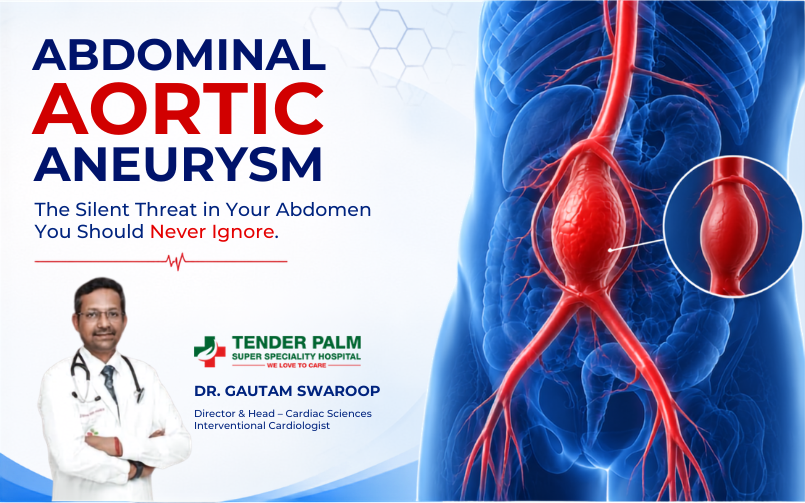
Abdominal Aortic Aneurysm: The Silent Threat You Should Never Ignore
Quick Answer
An Abdominal Aortic Aneurysm (AAA) is a weakening and enlargement of the abdominal portion of the aorta—the body’s largest artery that carries oxygen-rich blood from the heart to the rest of the body. Most abdominal aortic aneurysms develop slowly and produce no noticeable symptoms, making them difficult to detect without imaging tests. However, as the aneurysm enlarges, the risk of rupture increases significantly. A ruptured abdominal aortic aneurysm is a life-threatening emergency that requires immediate medical attention.
Fortunately, when detected early through appropriate screening and regular monitoring, abdominal aortic aneurysms can often be managed successfully. Depending on the size, growth rate, and overall health of the patient, treatment may involve careful surveillance, lifestyle modifications, minimally invasive Endovascular Aneurysm Repair (EVAR), or traditional open surgical repair.
Introduction
The human heart works tirelessly every second of every day, pumping blood through an extensive network of arteries that nourish every organ in the body. Among these arteries, the aorta is the largest and most important blood vessel. It acts as the body’s main highway, carrying oxygen-rich blood from the heart to the brain, abdomen, and lower limbs.
Despite its strength, the aorta is not immune to disease. Over time, age-related changes, smoking, high blood pressure, and other cardiovascular conditions can weaken its walls. When this weakening occurs in the abdominal section of the aorta, the artery begins to bulge outward, forming what is known as an Abdominal Aortic Aneurysm (AAA).
One of the greatest challenges with abdominal aortic aneurysm is that it is often called a “silent condition.” Many people experience no symptoms whatsoever until the aneurysm has grown considerably. Some individuals discover it accidentally during an ultrasound or CT scan performed for an entirely different medical reason.
This silent progression is exactly why awareness is so important. Early diagnosis provides doctors with an opportunity to monitor the aneurysm closely or intervene before it becomes life-threatening. Modern imaging techniques and minimally invasive treatment options have significantly improved patient outcomes, allowing many individuals to return to normal life after successful treatment.
At Dr. Gautam Swaroop’s clinic, patient education plays an essential role in cardiovascular care. Understanding your risk factors, recognizing potential warning signs, and seeking timely evaluation can dramatically reduce the chances of serious complications. In this comprehensive guide, we’ll explain everything you need to know about abdominal aortic aneurysm—from how it develops and who is most at risk to the latest treatment options, recovery process, and long-term prevention strategies.
Table of Contents
- What Is an Abdominal Aortic Aneurysm?
- Understanding the Role of the Aorta
- Why Does an Abdominal Aortic Aneurysm Develop?
- Who Is at Risk?
- Symptoms of Abdominal Aortic Aneurysm
- How Is AAA Diagnosed?
- When Does an AAA Need Treatment?
- Treatment Options for Abdominal Aortic Aneurysm
- EVAR vs Open Surgical Repair
- Recovery After Treatment
- Possible Complications
- Can AAA Be Prevented?
- When Should You See a Doctor?
- Key Takeaways
- Frequently Asked Questions
What Is an Abdominal Aortic Aneurysm?
Definition Box: Abdominal Aortic Aneurysm (AAA)
An abdominal aortic aneurysm is a localized enlargement of the abdominal aorta caused by weakening of the artery wall. Most aneurysms enlarge gradually over time and may not produce symptoms until they become large or rupture. The risk of rupture generally increases as the aneurysm grows in size, making timely diagnosis and regular monitoring extremely important.
An Abdominal Aortic Aneurysm (AAA) is an abnormal enlargement or ballooning of the abdominal portion of the aorta caused by weakening of the artery wall. The aorta is designed to withstand high-pressure blood flow every moment of the day. However, when part of its wall loses strength, the constant pressure generated by each heartbeat gradually pushes the weakened section outward. Over time, this creates a bulge that continues to enlarge unless properly monitored or treated.
Unlike many other cardiovascular diseases that immediately produce noticeable symptoms, abdominal aortic aneurysms often develop quietly over several years. This makes routine screening particularly important for individuals with known risk factors.
Not every aneurysm is immediately dangerous. Many remain small for years without causing problems. However, larger aneurysms have thinner walls and are much more likely to rupture, leading to severe internal bleeding that can rapidly become fatal without emergency surgery. Early identification allows cardiologists and vascular specialists to monitor aneurysm growth carefully and recommend treatment at the most appropriate time.
Understanding the Role of the Aorta
To understand why an abdominal aortic aneurysm is so serious, it’s helpful to first understand the function of the aorta. The aorta is the largest artery in the human body. It begins at the heart, travels through the chest, and continues into the abdomen before dividing into arteries that supply the legs and pelvic organs.
Every heartbeat pumps blood into the aorta under considerable pressure. Because of this continuous force, the walls of the aorta must remain strong and elastic throughout life. The abdominal portion of the aorta supplies oxygen-rich blood to several vital organs, including:
- Kidneys
- Liver
- Stomach
- Intestines
- Spleen
- Lower limbs
- Pelvic organs
When an aneurysm develops, the weakened arterial wall becomes progressively thinner. As the aneurysm enlarges, the wall is exposed to even greater stress, increasing the likelihood of rupture. A ruptured abdominal aortic aneurysm can cause massive internal bleeding within minutes. This is why doctors recommend regular imaging and timely intervention before rupture occurs.
Why Does an Abdominal Aortic Aneurysm Develop?
An abdominal aortic aneurysm rarely develops overnight. Instead, it is usually the result of many years of gradual damage to the arterial wall. Several biological processes contribute to this weakening.
Atherosclerosis
One of the most common contributors is atherosclerosis, commonly known as hardening of the arteries. Over time, cholesterol, inflammatory cells, calcium, and fatty deposits accumulate inside blood vessels. These deposits damage the arterial wall and reduce its elasticity. Eventually, portions of the wall become weak enough to expand under constant blood pressure. Although not every aneurysm is caused solely by atherosclerosis, it remains one of the strongest contributing factors.
Age-Related Degeneration
As people grow older, the connective tissues that provide strength and flexibility to the aortic wall naturally begin to deteriorate. The elastic fibers gradually lose their ability to withstand repeated stretching from millions of heartbeats each year. This age-related degeneration explains why abdominal aortic aneurysms are much more common after the age of 65.
High Blood Pressure
Persistent hypertension places continuous stress on the walls of the arteries. Think of it like a garden hose carrying water at much higher pressure than it was designed to handle. Over time, constant pressure weakens vulnerable areas, making aneurysm formation more likely. Proper blood pressure control plays an important role in slowing aneurysm progression.
Smoking
Smoking is considered one of the strongest modifiable risk factors for abdominal aortic aneurysm. The chemicals found in tobacco smoke damage blood vessels, accelerate atherosclerosis, increase inflammation, and reduce the body’s ability to repair arterial tissue. Research consistently shows that current and former smokers have a significantly higher risk of developing AAA compared with people who have never smoked.
Genetic Factors
Family history also plays an important role. Individuals with a parent, sibling, or close relative who has had an abdominal aortic aneurysm are more likely to develop one themselves. Certain inherited connective tissue disorders may also weaken the arterial wall, although these conditions are relatively uncommon.
Chronic Inflammation
Ongoing inflammation within the arterial wall contributes to gradual breakdown of collagen and elastin—the proteins responsible for maintaining the strength and flexibility of blood vessels. As these supportive structures deteriorate, the aorta becomes increasingly susceptible to enlargement.
Who Is at Higher Risk of Developing an Abdominal Aortic Aneurysm?
Although an abdominal aortic aneurysm can occur in almost anyone, certain people have a significantly higher likelihood of developing the condition. Understanding these risk factors allows both patients and healthcare providers to identify individuals who may benefit from early screening and regular monitoring.
- Older Age: Age is one of the strongest risk factors. Most abdominal aortic aneurysms are diagnosed in people over the age of 65.
- Smoking: The most important modifiable risk factor. Harmful chemicals in smoke promote inflammation and weaken the arterial wall structure.
- Male Gender: Men are diagnosed with AAA much more frequently than women, though aneurysms in women often carry a higher risk of rupture at smaller sizes.
- Family History: Genetic factors significantly increase susceptibility if a close relative has been diagnosed with AAA.
- High Blood Pressure: Persistent mechanical stress weakens and enlarges vulnerable areas of the artery.
- Atherosclerosis: The buildup of cholesterol and calcium damages the arterial wall, making it more prone to aneurysm formation.
- Other Cardiovascular Conditions: High cholesterol, peripheral artery disease, coronary artery disease, obesity, and chronic kidney disease are linked to higher AAA risk.
What Symptoms Should You Watch For?
One of the most concerning aspects of an abdominal aortic aneurysm is that most patients experience no symptoms during the early stages. The aneurysm often enlarges silently over many years, remaining undetected until discovered incidentally during imaging.
Symptoms of a Stable Abdominal Aortic Aneurysm
When symptoms do occur, they are often subtle and may include:
- Persistent pain in the abdomen
- Deep aching pain in the lower back
- Pain extending into the groin
- A pulsating sensation in the abdomen
- Feeling a throbbing lump in the abdomen
These symptoms do not necessarily indicate an emergency, but prompt evaluation can help determine whether the aneurysm requires monitoring or treatment.
Symptoms of a Ruptured Abdominal Aortic Aneurysm
A ruptured aneurysm is a medical emergency that requires immediate treatment. As the aneurysm tears, blood rapidly leaks into the abdominal cavity, leading to severe internal bleeding. Symptoms may include:
- Sudden, severe abdominal pain
- Intense lower back pain
- Pain spreading to the legs or groin
- Dizziness or fainting
- Rapid heartbeat
- Cold, clammy skin
- Low blood pressure
- Loss of consciousness
Without emergency medical intervention, rupture carries an extremely high risk of death. Anyone experiencing these symptoms should seek emergency medical care immediately.
How Is an Abdominal Aortic Aneurysm Diagnosed?
Early diagnosis is essential because treatment decisions depend largely on the size and growth rate of the aneurysm. Modern imaging techniques allow doctors to detect aneurysms accurately.
- Physical Examination: A doctor may occasionally detect a pulsating mass in the abdomen, though imaging is required for confirmation.
- Ultrasound: The most commonly used, quick, painless, and radiation-free screening test. It accurately measures aneurysm size and tracks growth.
- CT Scan: Provides highly detailed images to evaluate the exact shape, presence of blood clots, and relationship with nearby arteries.
- CT Angiography (CTA): Uses contrast dye to carefully assess blood flow and suitability for EVAR treatment.
- MRI: Used when additional anatomical information is required or when CT contrast cannot be safely administered.
When Does an Abdominal Aortic Aneurysm Need Treatment?
Not every aneurysm requires immediate surgery. Small aneurysms that remain stable may only require regular monitoring. Treatment becomes increasingly important when:
- The aneurysm reaches approximately 5.5 cm in men
- It enlarges rapidly over a short period
- Symptoms develop
- There is evidence suggesting impending rupture
Each patient is evaluated individually, balancing the risks of surgery against the potential danger of rupture.
Treatment Options for Abdominal Aortic Aneurysm
1. Medical Management and Surveillance
Small aneurysms often do not require immediate surgery. Instead, patients undergo regular imaging while focusing on strict blood pressure control, cholesterol management, smoking cessation, and healthy lifestyle habits to slow progression.
2. Endovascular Aneurysm Repair (EVAR)
Endovascular Aneurysm Repair (EVAR) is a minimally invasive procedure. Doctors access blood vessels through small groin incisions and use X-ray guidance to position a stent graft inside the aneurysm. This creates a new pathway for blood flow, significantly lowering rupture risk. EVAR generally offers smaller incisions, faster recovery, and shorter hospital stays.
3. Open Surgical Repair
Open surgical repair involves removing or bypassing the weakened portion of the aorta and replacing it with a synthetic graft through an abdominal incision. Although recovery takes longer, it provides excellent long-term durability, particularly for complex anatomies.
EVAR vs Open Surgical Repair
Both procedures aim to prevent aneurysm rupture, but each has distinct clinical advantages. The choice depends on careful evaluation by a cardiovascular specialist.
| Treatment Method | Advantages | Limitations |
|---|---|---|
| Endovascular Aneurysm Repair (EVAR) | Minimally invasive Shorter hospital stay Faster recovery Less postoperative discomfort Lower early complication rates |
Requires lifelong imaging follow-up Not anatomically suitable for all May require secondary procedures later |
| Open Surgical Repair | Excellent long-term durability Suitable for complex aneurysm anatomy Less need for repeated post-op imaging |
Larger abdominal incision Longer hospitalization Longer overall recovery period Greater initial surgical stress |
Recovery After Treatment
Recovery After EVAR
Because EVAR is minimally invasive, recovery is generally quicker. Most patients walk within 24 hours and are discharged within one to three days. During the first few weeks, patients must avoid heavy lifting while gradually increasing light activity. Most individuals return to normal daily activities within two to four weeks. Importantly, EVAR requires lifelong imaging surveillance to ensure the stent graft remains properly positioned.
Recovery After Open Surgical Repair
Open surgery requires more time due to the larger incision. Patients remain hospitalized for five to ten days. Early recovery focuses on pain management, respiratory exercises, and monitoring wound healing. Most patients require six to twelve weeks before returning to normal daily activities.
Possible Complications
If left untreated, an aneurysm can lead to rupture (causing rapid internal bleeding), blood clot formation, or compression of nearby structures like organs or nerves.
While treatment is generally safe, potential surgical complications include bleeding, infection, kidney injury (from contrast dye), or blood clots. Following EVAR, some patients may develop an endoleak, where blood continues flowing into the aneurysm sac outside the stent graft, making regular follow-up imaging absolutely essential.
Can Abdominal Aortic Aneurysm Be Prevented?
Although not completely preventable, several lifestyle measures significantly reduce the risk or slow progression:
- Stop Smoking: The single most important preventable cause of AAA.
- Control Blood Pressure: Reduces mechanical stress on the aortic walls.
- Manage Cholesterol: Slows down atherosclerosis progression.
- Stay Physically Active: Improves overall cardiovascular health.
- Eat a Heart-Healthy Diet: A balanced diet rich in fruits, vegetables, and lean proteins supports vascular health.
- Attend Regular Health Check-Ups: Routine ultrasound screening is highly recommended for men aged 65 to 75 who have ever smoked.
When Should You See a Doctor?
Arrange a medical evaluation if you are over 65 with a history of smoking, have a family history of AAA, experience persistent abdominal or back pain, or feel a pulsating mass in your abdomen.
Seek immediate emergency medical attention if you experience sudden severe abdominal or back pain accompanied by dizziness, fainting, cold sweating, or loss of consciousness, as these strongly indicate a ruptured aneurysm.
Key Takeaways
- An abdominal aortic aneurysm is a weakening and enlargement of the abdominal portion of the aorta.
- Most aneurysms develop silently without noticeable symptoms.
- Smoking, increasing age, high blood pressure, and family history are major risk factors.
- Ultrasound is the preferred screening test for high-risk individuals.
- Treatment options range from surveillance to Endovascular Aneurysm Repair (EVAR) or open surgical repair.
- Early diagnosis and long-term heart-healthy lifestyle habits prevent life-threatening rupture.
Frequently Asked Questions
- What causes an abdominal aortic aneurysm?
AAA develops when the wall of the abdominal aorta weakens over time. Smoking, aging, atherosclerosis, high blood pressure, and genetic factors all contribute to this weakening. - Does every abdominal aortic aneurysm require surgery?
No. Small aneurysms are monitored with regular imaging. Surgery is recommended when the aneurysm becomes large, grows rapidly, or causes symptoms. - Is abdominal aortic aneurysm painful?
Most aneurysms cause no symptoms. However, patients may experience abdominal, back, or groin pain as the aneurysm enlarges. - What is the difference between EVAR and open surgery?
EVAR is a minimally invasive procedure performed through small groin incisions. Open surgery involves replacing the weakened aorta through an abdominal incision. The best option depends on your anatomy. - Can women develop abdominal aortic aneurysms?
Yes. While more common in men, aneurysms in women can rupture at smaller sizes, making individualized treatment crucial. - Can lifestyle changes stop an aneurysm from growing?
Lifestyle modifications cannot eliminate an existing aneurysm, but they reduce cardiovascular risk and slow progression when combined with medical care. - Is abdominal aortic aneurysm hereditary?
Yes, family history increases the risk. Individuals with affected first-degree relatives should seek early screening. - When should I seek emergency medical care?
Sudden severe abdominal or back pain, fainting, dizziness, rapid heartbeat, or collapse require immediate emergency attention.
Conclusion
An abdominal aortic aneurysm is a potentially serious condition because it often develops silently and may remain undetected until it becomes dangerous. Fortunately, advances in screening, imaging technology, and modern treatment techniques have made it possible to identify and manage many aneurysms before complications occur.
Early diagnosis remains the key to successful treatment. Individuals with risk factors such as smoking, older age, hypertension, or a family history of aneurysm should not ignore the importance of routine medical evaluation. Appropriate imaging, timely intervention, and long-term cardiovascular care can significantly reduce the risk of rupture and improve overall outcomes.
Book Your Appointment Today
If you have been diagnosed with an abdominal aortic aneurysm, have persistent abdominal or back pain, or possess significant cardiovascular risk factors, timely evaluation is essential. Dr. Gautam Swaroop provides comprehensive assessment, advanced diagnostic evaluation, and evidence-based treatment for abdominal aortic aneurysm and other complex cardiovascular conditions.
From early detection and surveillance to advanced endovascular and surgical management, every treatment plan is personalized to ensure the best possible patient outcomes. Schedule a consultation today to discuss your concerns, understand your treatment options, and take a proactive step toward protecting your cardiovascular health.

You must be logged in to post a comment.